
Deep Tissue Massage in St Albert: A Practical Guide for Neck, Shoulder and Back Pain
That knot in your shoulder. The tight lower back that shows up after a long day. The neck tension that turns into a headache by dinner. At first, it is easy to ignore. Then one day, you realize your body has been asking for help for weeks, months, or maybe even years. If you are looking for deep tissue massage in St. Albert, this guide will help you understand what it is, who it can help, what to expect, and how to get the most from your appointment.
Deep tissue massage is often misunderstood. Some people think it simply means “the hardest massage possible.” Others worry it will be painful, intense, or too much for their body. In reality, good deep tissue work is focused, careful, and customized. The goal is not to overpower the body. The goal is to work with the body so tight muscles, restricted areas, and recurring tension patterns can begin to release.
At Healing Point Massage Therapy, treatment is tailored to each client’s needs. Whether you are dealing with stress, pain, physical work, desk posture, athletic soreness, or ongoing muscle tightness, the right massage approach can help you feel more comfortable in your body.
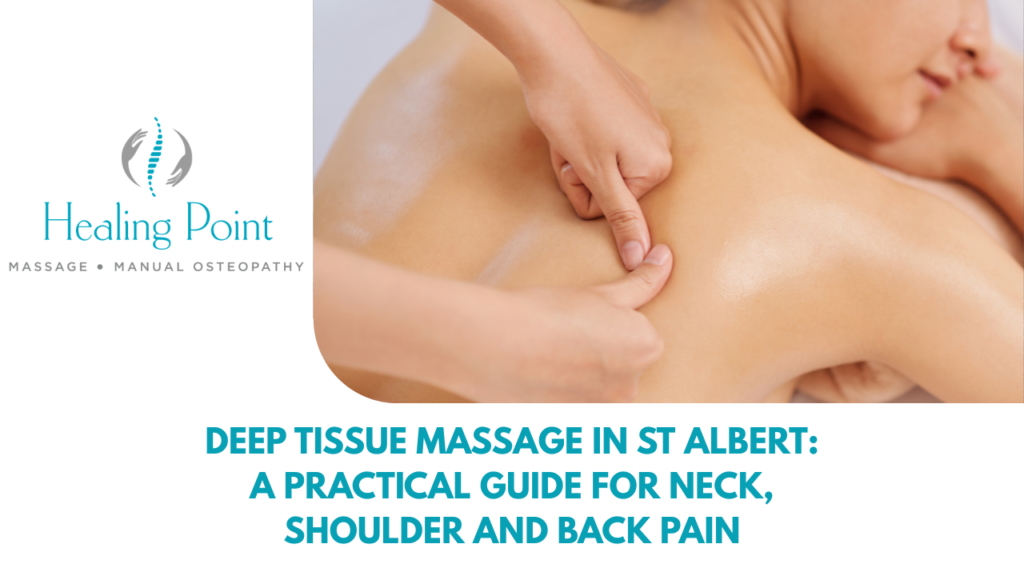
Deep Tissue Massage in St. Albert: What It Actually Means
Deep tissue massage focuses on the deeper layers of muscle and connective tissue. It usually involves slower strokes, firm pressure, and focused work on specific areas of tension. Unlike a relaxation massage, which is generally lighter and more soothing, deep tissue work is often used when a client has targeted concerns.
That might include:
- Tight shoulders from computer work
- Low-back stiffness
- Neck tension
- Hip and glute tightness
- Recurring muscle knots
- Tension headaches
- Soreness from physical labour
- Athletic recovery
- Chronic muscle tension
The best deep tissue massage is not about forcing pressure. It is about finding the right pressure. Your therapist may use firm pressure, but they should also check in with you, adjust as needed, and work at a level your body can tolerate.
A helpful way to think about it is this:
Deep tissue massage should feel productive, not punishing.
Some discomfort can happen when a tight area is being worked on, but sharp pain, breath-holding, or bracing your body is usually a sign that the pressure is too much. Communication matters. If the pressure feels too intense, say so. A good massage therapist wants that feedback.
For a broader look at how massage therapy is used for pain and wellness, the National Center for Complementary and Integrative Health provides a helpful overview of massage therapy and different treatment styles.
Common Signs Your Body May Benefit From Deep Tissue Massage
Many people wait until pain becomes severe before booking. The problem is that tension often builds gradually. By the time it is affecting sleep, movement, mood, or work, your body may already be compensating.
Here are common signs that deep tissue massage may be worth considering:
| What You Notice | What It Could Mean |
| Tight shoulders after desk work | Postural strain or upper back tension |
| Low-back ache after standing | Hip, glute, or lumbar tension |
| Headaches from neck tightness | Neck and shoulder tension patterns |
| Same knot keeps returning | Chronic muscle guarding or repetitive strain |
| Poor sleep from discomfort | Your body may be struggling to fully relax |
One of the biggest questions people ask is, “Why does the same knot keep coming back?”
Usually, recurring tension is not random. It may be connected to how you sit, how you work, how you sleep, how you lift, how much stress you carry, or how your body moves during the day. Massage can help reduce tension in the area, but long-term improvement often comes from combining treatment with better habits between appointments.
For example, someone with upper back tension may benefit from massage, but they may also need to adjust their workstation, take movement breaks, stretch their chest, or strengthen postural muscles. Someone with low-back pain may need work through the glutes, hips, and hamstrings, not just the lower back itself.
That is why a customized approach matters.
What to Expect During Your First Appointment
Your first appointment should start with a conversation. Your massage therapist will want to know what brought you in, where you feel pain or tension, how long it has been happening, what makes it better or worse, and what kind of pressure you prefer.
You may be asked about:
- Injuries
- Medical conditions
- Pregnancy
- Surgeries
- Medications
- Areas to avoid
- Your treatment goals
- Insurance or direct billing needs
From there, your therapist will explain how the session will work. You will be properly draped throughout the treatment, and only the area being worked on should be uncovered. If you are unsure what to wear or how much clothing to remove, ask. Comfort and consent are part of the process.
During the massage, the therapist may focus on the area that hurts, but they may also work around it. For example, neck pain can be connected to shoulder tension. Low-back discomfort can involve the hips, glutes, and legs. A good treatment plan looks at how the body works together.
If you are new to deeper pressure, consider starting with a 60-minute appointment. A 30-minute massage can be useful for one specific area, but a longer session gives the therapist more time to assess and treat connected areas. A 75 or 90-minute session may be helpful when multiple areas need attention.
After your massage, it is normal to feel relaxed, lighter, or looser. Some people feel mild soreness the next day, similar to post-workout soreness. Gentle movement, water, and rest can help.
You can learn more about Healing Point’s available treatments on our massage therapy services page.
How Often Should You Book Deep Tissue Massage?
There is no one-size-fits-all answer. The right frequency depends on your body, your goals, your schedule, and how long the issue has been there.
Here is a simple guide:
| Goal | Possible Booking Rhythm |
| Sudden tightness or flare-up | Weekly for a short period |
| Chronic neck, shoulder, or back tension | Every 2 to 4 weeks |
| Physical job recovery | Every 2 to 4 weeks, depending on workload |
| Athletic maintenance | Before or after high-demand training periods |
| General maintenance | About once a month |
One massage can absolutely help you feel better, but if your body has been holding tension for a long time, consistency is often more effective. Think of it like dental care, fitness, or stretching. Waiting until something is painful usually makes the problem harder to manage.
Massage also works best when paired with simple home care. Depending on your therapist’s recommendations, that may include:
- Gentle stretching
- Heat therapy
- Light movement
- Hydration
- Better desk ergonomics
- Strength and mobility exercises
- More frequent posture breaks
Small changes between appointments can help your results last longer.
When Deep Tissue Massage May Not Be the Right Fit
Deep tissue massage can be helpful, but it is not the best choice for every person in every situation. Sometimes a lighter therapeutic massage, relaxation massage, prenatal massage, acupuncture, manual osteopathy, or medical assessment may be more appropriate.
You should let your therapist know if you have:
- Recent surgery
- Acute injury
- Unexplained severe pain
- Fever or illness
- Skin infection or open wounds
- Blood clot concerns
- Certain heart or circulation conditions
- Pregnancy
- Significant bruising or swelling
- A recent motor vehicle accident
If you are pregnant, prenatal massage is usually adapted with proper positioning and supportive pillows. If you were recently injured in a car accident, your therapist may need different information before beginning treatment. If your pain is severe, sudden, spreading, or accompanied by numbness, weakness, fever, or other concerning symptoms, it is best to speak with a medical professional.
The most important thing is to be honest during your intake. Massage therapy is most effective when your therapist understands your health history, comfort level, and goals.
FAQ: Deep Tissue Massage, Pain Relief and Booking
Is deep tissue massage painful?
It should not be unbearable. You may feel strong pressure or mild discomfort in tight areas, but you should still be able to breathe and relax. If the pressure feels too intense, tell your therapist.
How sore will I feel after deep tissue massage?
Some people feel mild soreness for a day or two, especially after focused work on tight muscles. Others feel immediate relief. Gentle movement, water, and rest can help after treatment.
Is deep tissue massage better than relaxation massage?
It depends on your goal. Relaxation massage is ideal for stress relief and calming the nervous system. Deep tissue massage is often better for targeted muscle tension, recurring knots, and specific pain areas.
How long should I book for neck and shoulder pain?
A 60-minute appointment is a good starting point for most people. If your tension involves the neck, shoulders, upper back, jaw, and headaches, a longer appointment may give your therapist more time to work thoroughly.
Can deep tissue massage help lower-back pain?
It may help reduce muscle tension related to lower-back discomfort. Your therapist may also work on the hips, glutes, and legs because these areas can contribute to back tension.
Can I use insurance or direct billing?
Healing Point offers direct billing for many insurance providers, but coverage depends on your specific plan. Some plans may require a doctor’s prescription, so it is best to check your benefits before booking.
Do I need a prescription for massage therapy?
You do not need a prescription to book a massage, but some insurance plans require one for reimbursement or direct billing. Check with your provider so there are no surprises.
How do I book a massage at Healing Point?
You can book online, call the clinic, or visit in person. If you are unsure which treatment to choose, the team can help guide you toward the right option based on your goals.
Feel Better, Move Better and Stop Ignoring the Same Old Tension
You do not have to wait until your body is shouting to take care of it. Tight shoulders, recurring back pain, neck tension, headaches, and stubborn muscle knots are all signs worth paying attention to. The right massage can help you understand what your body needs, release built-up tension, and build a better rhythm for ongoing care. If you are ready to feel more comfortable, more mobile, and more at ease, booking a deep tissue massage in St. Albert is a practical place to start.